
How to Check Windows During Apartment Handover So You Don’t End Up With Drafts and Condensation
Publication date: January 30, 2026

Windows in a new-build often look finished and neat, but they are also one of the most common sources of hidden issues. Drafts, cold glass, constant condensation, or mold on the window reveals are almost always caused not by poor window profiles, but by installation mistakes and incorrect adjustment. The apartment handover is the only moment when you can spot these defects and document them formally without extra cost on the owner’s side.
How to Check Windows During Apartment Handover
A proper window check should be systematic. It’s important to evaluate not only the appearance, but also how the sashes operate, the sealing pressure, installation joints, and all connections around the frame. Most issues can be detected visually and by touch, without removing the reveals and without special tools.
Below is the inspection logic PKB inspectors use during apartment handovers.
Checking Sash Geometry and Closure Tightness
The first step is to assess geometry.
Look for the following signs:
- The sash closes smoothly, without twisting or excessive force
- Gaps around the perimeter are even
- When closing, the sash does not “shift” upward or sideways
- The contact line looks visually straight and consistent
A twisted or misaligned sash is a common reason for poor sealing and drafts. Even brand-new hardware cannot compensate for installation errors if the geometry is wrong from the start.
Installation Joints and Connections Without Removing the Reveals
You don’t need to open up the reveals, but installation defects are often visible indirectly.
Signs of incorrect installation:
- Cracks between the frame and the reveal
- Visible traces of expanding foam
- Voids under decorative trims
- Freezing spots or cold areas around the frame connection zone
In European window inspection practice, reflected in ift Rosenheim recommendations, special attention is given to the frame-to-wall connection joint. Even with a good insulated glazing unit, a poorly executed installation joint leads to heat loss and the feeling of drafts.
Hardware, Sealing Pressure, and Adjustment
A window should work correctly immediately after installation.
Check:
- All sashes open and close smoothly
- The handle locks firmly in its end positions
- There is no play, wobble, or sticking
It’s important to understand the difference between adjustment and fixing a defect. Increasing sealing pressure may improve the feeling of tightness, but it does not eliminate installation mistakes. According to the ift Rosenheim approach to evaluating window connection details, adjustment is acceptable only as fine-tuning, not as a way to hide construction defects.
Checking Window Sills and External Flashings
Window sills and external flashings are often installed “formally”, but this is exactly where leaks and condensation problems start.
What to check:
- A proper slope away from the window
- No gaps in the connection area
- Rigid, stable fastening
Installation mistakes with window sills, highlighted in European ift Rosenheim recommendations, can lead to moisture accumulation around the window and local cold spots, even if the frame itself is installed correctly.
Condensation and Freezing Points
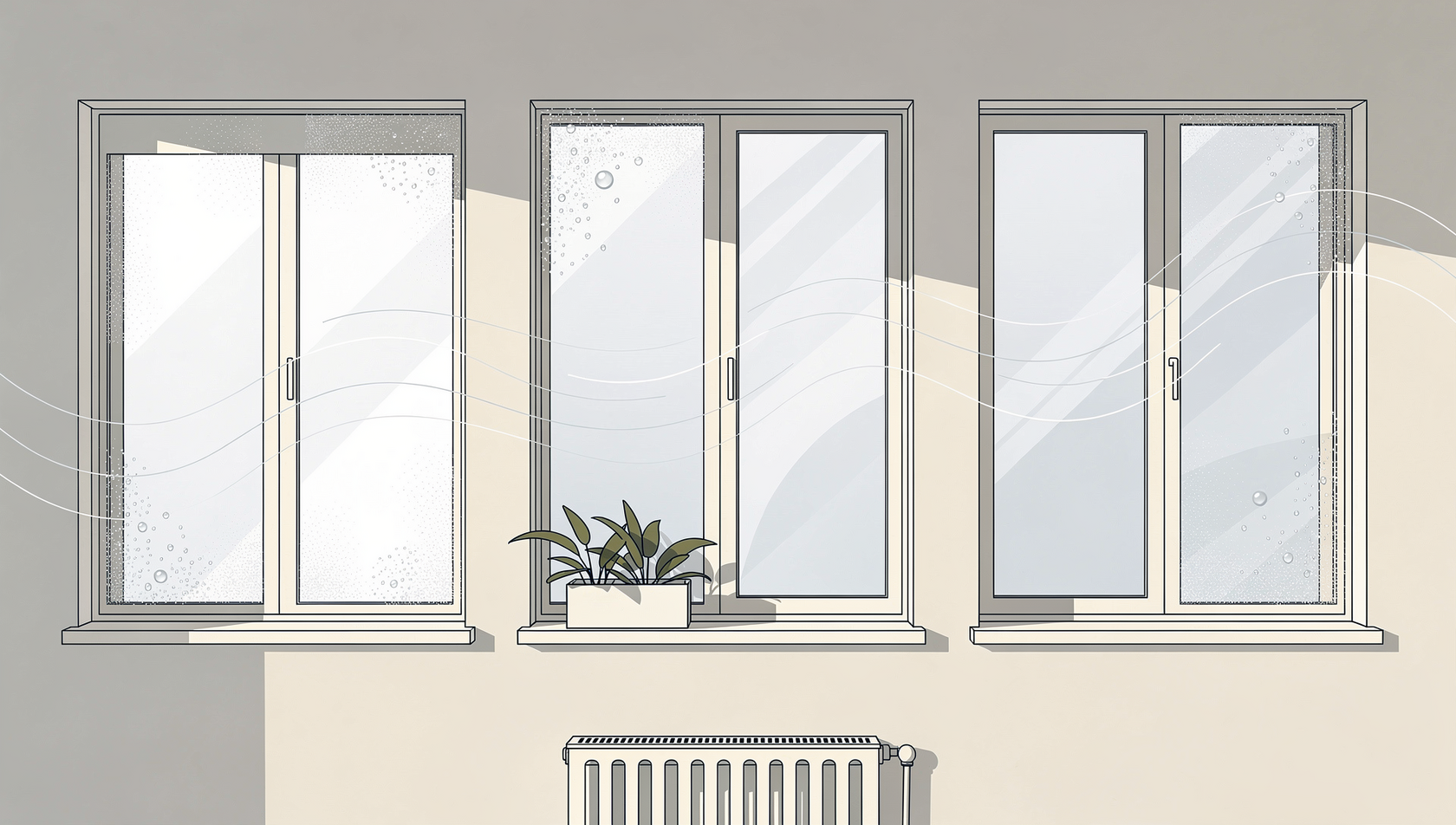
Condensation is one of the most common complaints after moving into a new-build. However, it doesn’t always mean the windows are “bad”.
When Condensation Is Linked to Installation Errors
If the frame area or reveals feel cold, and in freezing weather you see damp patches or ice, the cause is often a faulty installation detail. In the European evaluation practice referenced by ift Rosenheim, installation quality — not the window profile — is most often the root cause of these issues.
When Condensation Is Linked to Indoor Conditions
Higher humidity is normal in new buildings. If windows are airtight but ventilation works poorly, condensation can appear even with correct installation. It is important to record this condition during handover to avoid disputes with the developer later.
How to Record Window Defects in the Handover Report
Wording in the handover report is critical.
It is recommended to include:
- Poor sash-to-frame contact or uneven closure tightness
- Cold areas in the frame connection zone
- Signs of a non-airtight installation joint
- Signs of incorrect installation of the sill or external flashing
Phrases like “it’s drafty” are too vague. PKB inspectors use technically neutral wording that developers typically accept without attempting to dispute it.
Questions and Answers About Window Checks
How can you tell windows were installed incorrectly if the reveals have not been opened?
Installation errors are indicated by cold spots around the frame connection, cracks between the frame and the reveal, traces of expanding foam, and local freezing in winter. These signs allow you to identify the issue without damaging finishes.
Is it normal if you feel drafts from windows in a new-build?
No. Drafts are not considered acceptable. They are most often linked to installation issues or sash geometry problems. With proper documentation in the handover report, the developer must fix these defects.
Is condensation on windows acceptable during apartment handover?
Condensation can occur due to higher humidity in a new building. However, cold zones on the frame, reveals, or in the corners of the glazing unit indicate installation problems that should be documented.
How to check window sealing pressure without tools?
Close the sash and slowly run your hand along the perimeter of the frame. If you feel cold air movement or pronounced cold spots, the sealing pressure is insufficient. You can also assess whether the closing resistance feels even.
How to document window defects correctly in the handover report?
Use neutral technical wording that describes facts, not sensations. For example, note uneven sash contact, cold areas in the connection zone, or signs of an improperly executed installation joint.
PKB Expert Opinion
Based on PKB’s experience, windows are among the top three most problematic elements during apartment handover. Defects are often not obvious to the buyer, but after moving in they become a constant source of discomfort. An independent inspection helps identify issues before signing documents and avoids paying for repairs out of pocket.
In practice, we often see situations where a sash “seems to close fine”, but there is a twist, uneven sealing pressure, or weak contact in the corners. In the first weeks it may feel like a minor issue, but in cold season it turns into drafts, damp reveals, and ongoing complaints about condensation. That is why it’s important to record not only obvious defects, but also early signs of incorrect installation while the developer is still obligated to fix them without disputes and delays.